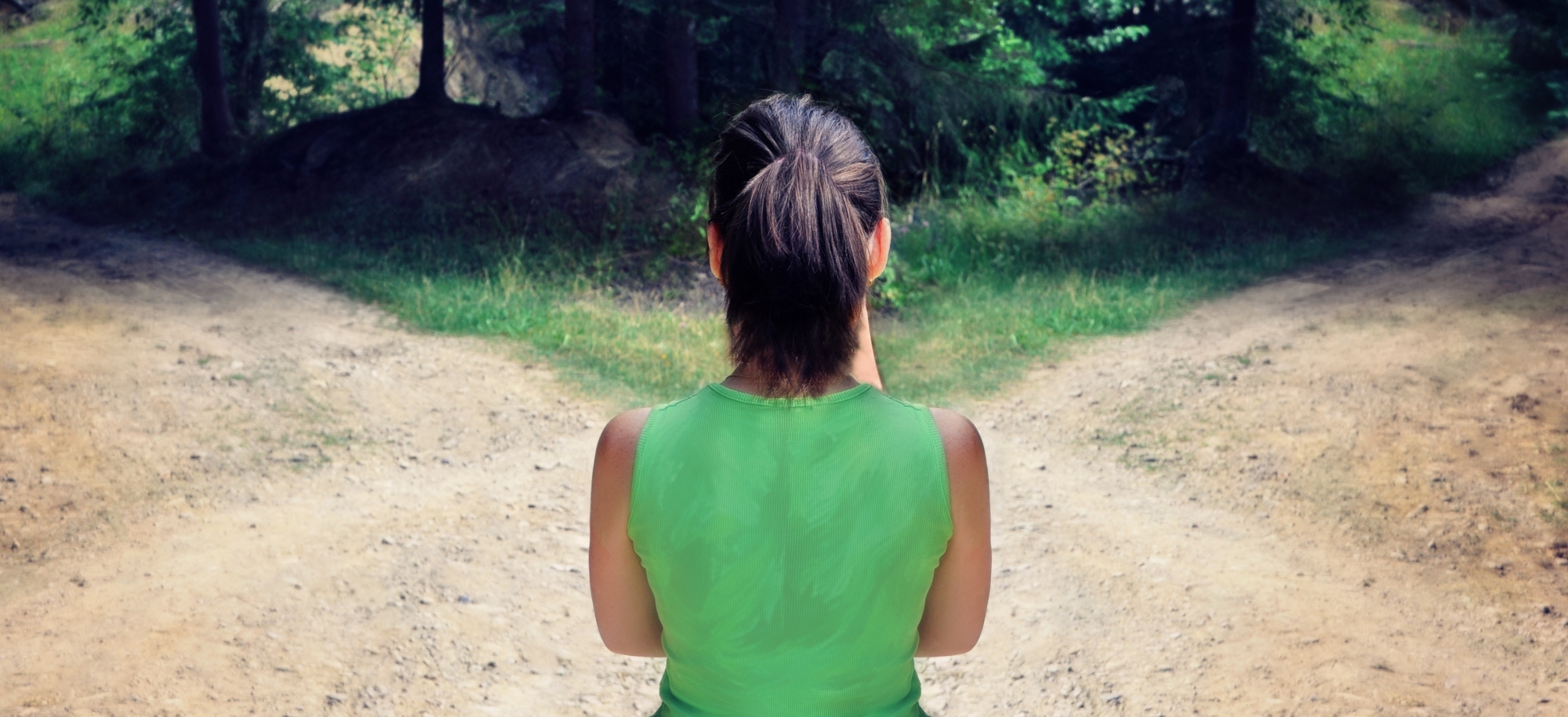
Working as a psychotherapist, I have often helped clients to recognize that we always have some element of choice, even if sometimes it feels as though we don’t, and even if none of the options open to us are ideal, or even very palatable.
Why? Because it really does help, when we’re suffering, to know that we do have options, at least in most situations. The feeling of being forced into one way of being contributes to the stress we experience in difficult circumstances. It’s easy to feel trapped, without any choices at all. But the truth is, most of us are lucky enough to have some level of control over at least some aspects of our own lives, and perhaps most importantly, we also have choices about the ways in which we respond to difficulties and adversities, large and small.
So, when my son died by suicide, what were my choices in this overwhelmingly horrific situation? Did I even have any? It certainly didn’t seem that way to me.
That first night, I beat my fists against the kitchen cupboards in shock, anger, and denial, shouting “No! No! No!” over and over again. I collapsed on the living room floor. My whole body began to shake. Night after night, unable to sleep, I went downstairs to sit for hours alone in the dark at the cold kitchen table. I made bargains with a God I don’t really believe in, offering my life in exchange for my son’s, pleading with God to take me instead, so my son could have another chance at life. I screamed “Why?” and “How could you?” loudly or silently into the empty space in front of his picture. begged him, beseeched him, to return to me.
I shouted and screamed at him, out on the empty wintery hillside. I continued to send tortured, raging WhatsApp messages to his phone. I yelled profanities at him in my journal. I yearned for his voice, his hugs, his laughter. I lay on summer evenings under the lime trees, weeping softly, my body curled around a little wooden cross in the churchyard on top of the hill. I wandered home afterwards, spent on tears, and finally exhausted. And I told him repeatedly, in my often-deranged inner dialogues with him, that he had left me with no choices at all.
I believed my son’s choice had taken all my options away and that I had no alternative but to live a life of pain, to mourn him, my beloved child, forever. There were many days when I felt that if I had had the choice, I would have chosen not to live at all, rather than to live in the devastation that was now my life. I longed for release from the pain and the torment. I saw no way forward. None.
I remember a conversation about a year after he died, with my erstwhile grief companion, now friend Nikki, whose lovely 19-year-old daughter died about 3 years before we lost Anton. She said something that made me realize she didn’t feel (as I did at the time) that dying would be preferable to living. And so I asked her, “Do you not want to die?” and she said, “No. Because we only get one life, don’t we? And it is still a beautiful world.” At the time, I couldn’t really relate to what she was saying, but her words nevertheless registered with me, and I marveled at her capacity to feel that way.
One day during that first year, I drove to see my brother Lance, who had given me such loving and unfaltering support through the darkness of the past 3 years. I arrived in floods of tears, physically shaking, desperate, in such a dark place, I was sure no one could feel this much pain and live. I told him, “I can’t do it, Lance. I can’t do it. I cannot survive this.” He just looked at me and asked, “What are you going to do then?” In that moment, I felt as though he had punched me in the face. The simplicity of his question stopped me in my tracks. I was forced, against my will, to acknowledge that I did, in fact, have choices. No remotely easy choices, certainly, but choices nonetheless.
The biggest decision I made was to live. Despite everything, to continue living without my son.
It didn’t happen that one day I just woke up and declared that I would, after all, live. It didn’t even happen slowly and imperceptibly, as the days became weeks, the weeks became months, and then years.
In fact, I had made the choice without even being aware of it, in the immediate aftermath of my son’s death. There was never any question in my mind that I could hurt the rest of my family and friends by opting out of living. I had a husband and son who needed me to live, whose lives would be doubly destroyed by losing me as well as Anton. At times, this made me even angrier. I still wanted to die, and there was a little voice in my mind that told me I might be with my son again if I did.
But I chose to live for the people who are alive and love me.
Once I realized I had consciously chosen to continue the life I had, I began to see I had other choices, too. Let me be very clear: I didn’t want any of those choices, because they meant a life without my son. It went against every sinew of my being as a mother to even consider a life without him in my world. But if I were to live, I would need, at some point, to make a few decisions about what would make such a life conceivable. As Dr. Sangeeta Mahajan wisely asked herself after she lost her own son Saagan to suicide, “I am going to die one day, and how am I going to live until I die?”
I didn’t choose to be a member of this club that no one wants to join. I don’t deserve the shock and misery that losing him has brought into my life, any more than you, or anyone bereaved by suicide or any death does. But I am here now, and there is absolutely nothing I can do to change what has happened. All I can do is find a way of living that is bearable for me, and for it to be bearable, it needs to bring some meaning to my life and honor my beloved son.
So that was the second biggest choice I made: what kind of life I could bear and what this life would need to include. After that, it became a little easier to start making additional choices about how I would create this new normal of being. I’m not there yet, I’m still finding my feet, stumbling and staggering around as I try to forge a way forward, but I have more hope than I have had in a long time, and that’s a good start.