Penguins travel and rest on rafts made of their collective bodies. On land they huddle, constantly shifting, small steps, each taking its turn rotating into the warm middle. Sheltered. Protected. Held.
When my daughter died, my heart hurt. Takotsubo cardiomyopathy, my left ventricle ballooning into the shape of a Japanese octopus trap. Broken heart syndrome. Though most octopuses are solitary, some form communities. A tangle.
I longed to float away. With others but separate. A raft of mourners was what I needed. To be part of a collective grief, but still able to hear my own distinct voice howling her name in the universe. Lydia.
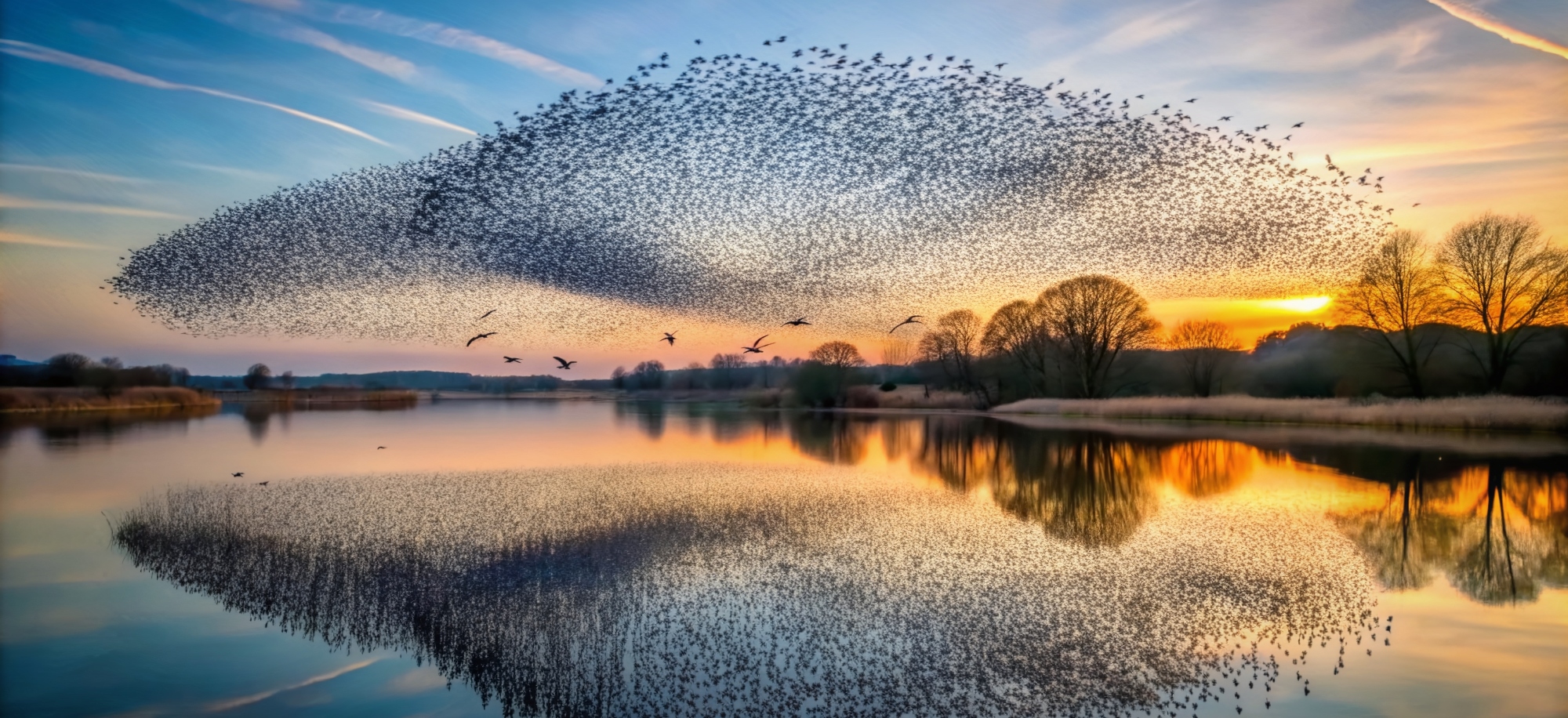
A murmuration of ten thousand starlings, each wingbeat individual but spreading waves of connection. Undulating, never-ending supplication. Communication. Validation.
Profound grief rewires the brain. Makes you forgetful. It could turn you into a fish. Jittery, jumping, a flash of silver. A neon green electric eel, sleeping with eyes wide open. Or not sleeping at all. Fish in a shoal are less stressed, healthier, than if isolated. A shoal might contain fish of different species while a school is less diverse. Fish in a school, like starlings in a murmuration, move together. One turns, the school turns.
My son’s goldfish, Ed, lived a long life, alone in his bowl. He recognized my son and would swim to the surface and put his whole face out of the water when Daniel entered the room. When Daniel went to sleepaway camp, Ed ate the food I gave him every day but never greeted me with that enthusiasm. One morning I found Ed floating belly up. Alone.
Elephants have been known to return to their dead. Rock gently in unison. Stroke the bones of the deceased. A collective noun for elephants is a memory.
Tahlequah, an orca, carried her calf’s corpse for 17 days, over 1,000 miles. Other orcas—primarily females—supported her, sometimes carrying the calf so she could rest. A collective noun for orcas is a pod.
I found my raft, and we drifted to shore. I was held and huddled till my heart rate dropped to normal. Till my left ventricle resumed its pre-shock state. Till my brain fog began to lift. Till my neurons settled down and the neon electric eel of me faded to a soft green glow. There is no word for this group of grieving mothers, this community of mourners.
I will give us a name. I shall call us a raft. A huddle. A pod. A takotsubo. I shall call us an understanding. Or, like a group of unicorns, I will call us a blessing.